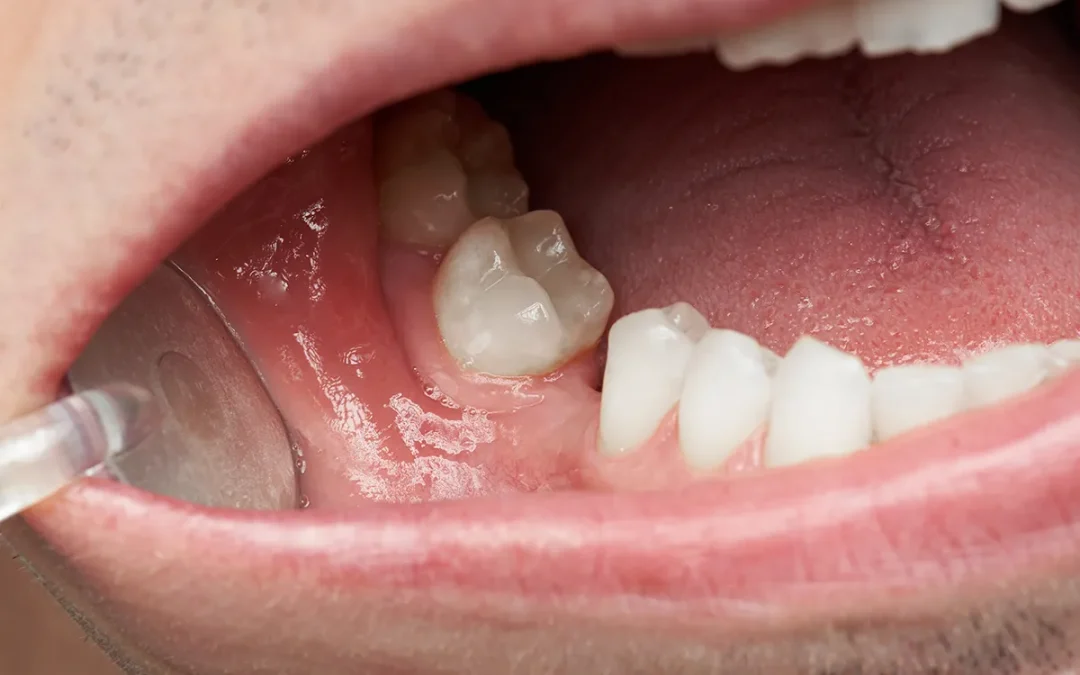
Your missing tooth and its domino effect
A missing tooth often feels manageable at first, especially when it is hidden at the back of the mouth. Your smile may still look the same in photos, eating feels mostly normal, and daily life continues without much disruption. It is easy to assume that one small gap is not a serious problem.
The reality is that a missing tooth can be the first domino to fall.
Your mouth functions as a connected system where every tooth supports the others around it. When a tooth is lost, the balance begins to change. Nearby teeth can gradually drift into the space, opposing teeth may move out of position, and the jawbone beneath the gap can start to shrink due to lack of stimulation.
What begins as a single missing tooth can slowly trigger a domino effect throughout the mouth. Over time, changes in tooth position, bite alignment, and bone support can make chewing less efficient and place additional stress on surrounding teeth.
Many people are surprised to learn that the effects of a missing tooth are not only cosmetic. Left untreated, a single gap can eventually affect chewing, speech, jaw comfort, facial appearance, and the long-term health of neighbouring teeth.
Replacing a missing tooth early can often help prevent these changes before they progress. In many cases, treatment is simpler, more comfortable, and more cost-effective when addressed sooner rather than later. Understanding the domino effect of tooth loss can help you make informed decisions before a small gap leads to bigger dental problems.
Shift and drift of neighbouring teeth
Every tooth in your mouth helps maintain balance and alignment. When one disappears, the neighbouring teeth lose part of their support system.
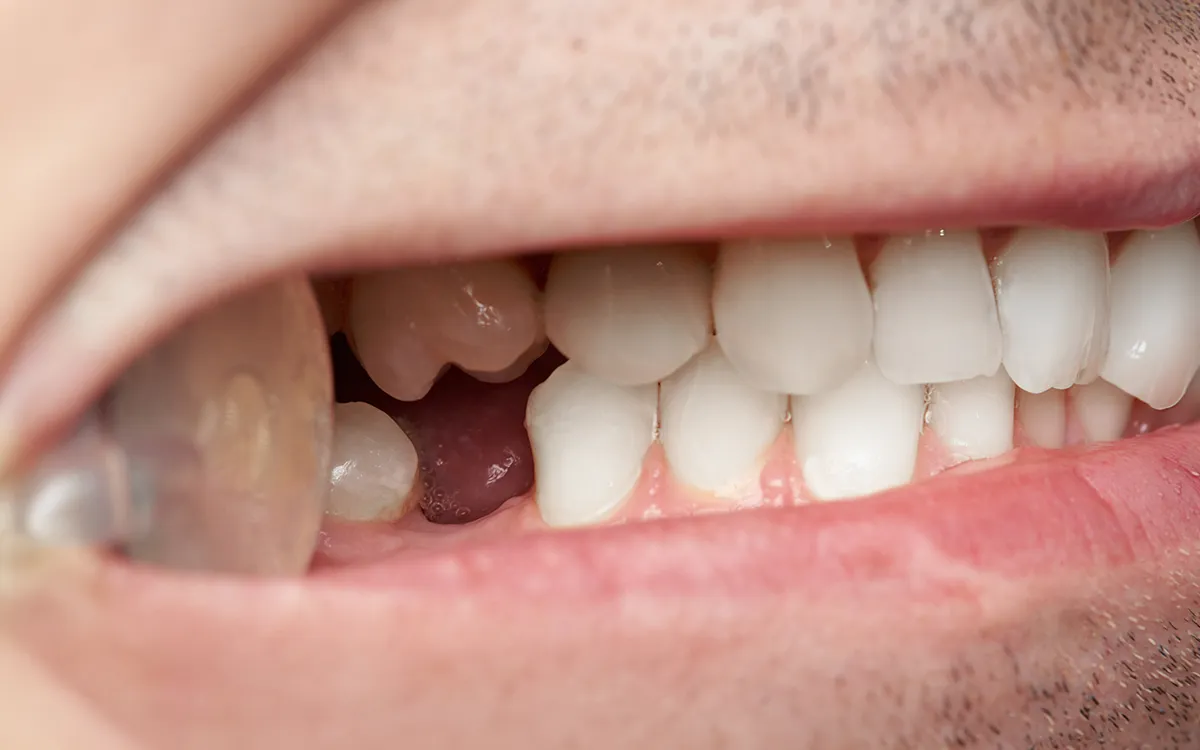
Over time, nearby teeth begin leaning or drifting into the empty space. Even a slight movement can gradually alter the way your upper and lower teeth fit together. Food may become trapped more easily, cleaning becomes more difficult, and uneven pressure starts developing across your bite.
Another common issue is known as a super-eruption. This happens when the tooth opposite the missing gap slowly grows further out because it no longer has anything to bite against. For example, if a lower molar is missing, the upper molar above it may begin extending downward into the empty space.
These movements rarely happen overnight. The process is slow and often painless in the beginning, which is why many people do not notice the changes until their bite already feels different.
Loss of jawbone health
One of the most important roles of a natural tooth is hidden below the gumline.
The root of a tooth continuously stimulates the jawbone during chewing and biting. This stimulation signals the body to maintain strong, healthy bone in that area. Once the root is gone, the jawbone no longer receives that signal.
The body begins absorbing the unused bone in a process called bone resorption.
This loss of bone density can start surprisingly early after tooth removal and continues gradually over time. The longer the space remains untreated, the more bone disappears.
Bone loss can create several complications:
- Weakening of the jaw structure
- Changes in gum contours
- Difficulty placing future dental implants
- Increased risk of neighbouring teeth becoming unstable
Many patients are unaware that this is happening because bone loss is silent. It usually cannot be seen or felt during the early stages.
Changing facial appearances
Untreated tooth loss can prematurely age your appearance. Teeth do more than help you chew. They also provide important structural support for your lips, cheeks, and overall facial shape.
When several teeth are missing, particularly towards the back of the mouth, the lower face can begin to lose volume and definition. Combined with gradual jawbone shrinkage, this may contribute to a more hollow, sunken, or aged look over time.
Changes you may experience include:
- Cheeks appearing more hollow
- Lips losing support and fullness
- Increased wrinkling around the mouth
- Shortening of the lower facial height
These changes often happen so slowly that they go unnoticed. Daily familiarity with your own appearance can make subtle shifts in facial structure difficult to detect. As a result, many people simply feel they look older, more tired, or less like themselves without realising that tooth loss and bone changes may be contributing factors.

Bite problems and jaw joint strain
Your bite works best when every tooth is in its proper place. When a tooth is lost, the resulting imbalance can place excessive forces on the teeth, muscles, and joints that remain.
When pressure is no longer distributed evenly, certain teeth begin carrying more force than they were designed to handle. This excessive strain can lead to:
- Chipped or cracked teeth
- Faster tooth wear
- Tooth sensitivity
- Difficulty chewing comfortably
The jaw joints and surrounding muscles can also become overworked. Some patients develop symptoms associated with temporomandibular joint dysfunction, commonly known as TMJ issues.
These symptoms may include:
- Jaw pain or tightness
- Clicking or popping sounds
- Headaches
- Facial tension
- Neck discomfort
In many cases, the connection between a missing tooth and jaw discomfort is not immediately obvious. The effects build slowly as the bite becomes increasingly unstable.
Trouble eating and speaking
Eating and speaking rely on teeth working together. While the effects may not be obvious at first, even a single missing tooth can alter the way your mouth functions each day.
Many people unconsciously begin chewing on one side of the mouth to avoid the gap. Over time, this uneven chewing pattern can place extra stress on certain teeth and jaw muscles.
Missing front teeth may also affect speech clarity, particularly with sounds that rely on tongue placement against the teeth.
Some patients adjust so gradually that these changes feel normal. However, restoring the missing tooth often reveals how much function had quietly been lost.

Why waiting often costs more
One of the most common reasons people delay treatment is financial concerns. When the gap isn’t causing significant pain or obvious problems, treatment can feel easy to put off.
Unfortunately, delaying treatment often increases both complexity and cost.
Replacing a tooth soon after it is lost is generally more straightforward. Once teeth begin shifting and bone shrinks, additional procedures may become necessary before replacement is possible.
These treatments can include:
- Bone grafting to rebuild lost jawbone
- Orthodontic treatment to reposition shifted teeth
- Gum treatment to improve tissue health
- Restoration of damaged surrounding teeth
A smaller problem today can become a far more involved treatment plan several years later.
Modern options for replacing a missing tooth
Modern dentistry offers several reliable ways to restore missing teeth. The best option depends on your oral health, budget, lifestyle, and long-term goals.
Dental implants are widely considered the gold standard for tooth replacement.
An implant replaces both the tooth root and the visible crown, helping preserve the jawbone while functioning much like a natural tooth. Implants are strong, stable, and designed to integrate with the surrounding bone.
They can replace a single tooth or support multiple teeth, depending on the situation.
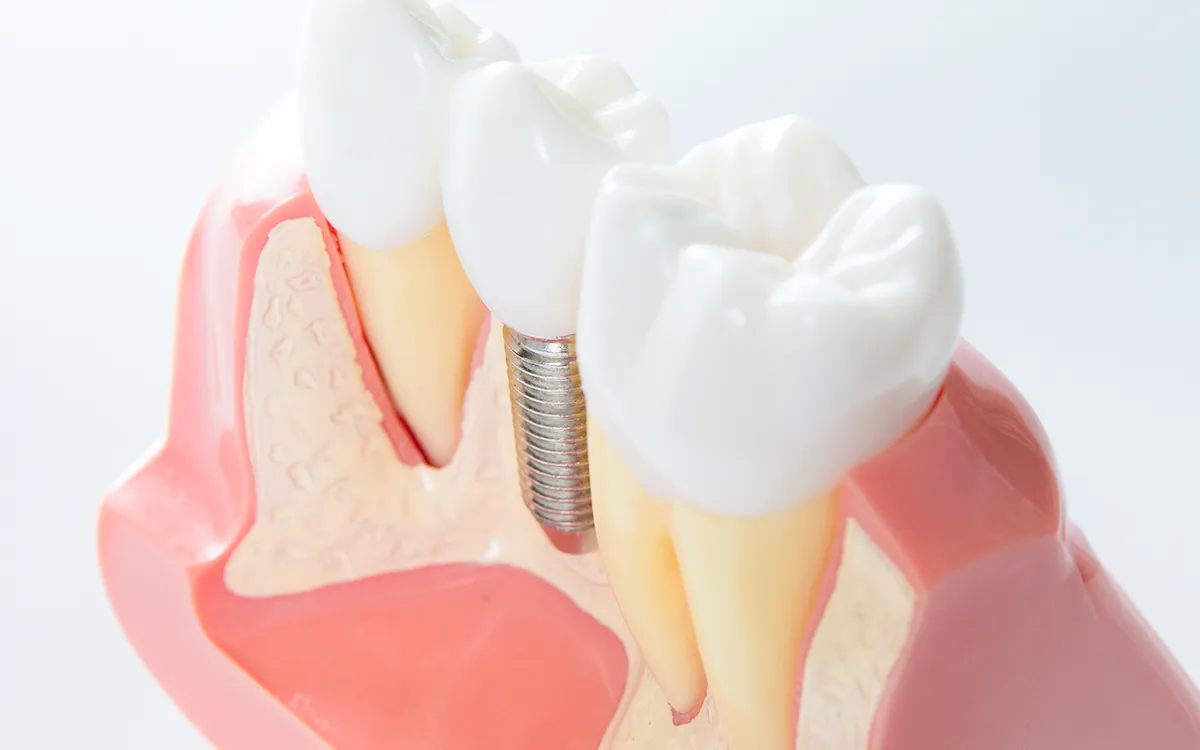
A dental bridge fills the gap by attaching a replacement tooth to the neighbouring teeth on either side.
Bridges are fixed in place and provide a stable, natural-looking solution. They are often suitable when the surrounding teeth already require crowns or additional support.
Partial dentures are removable appliances designed to replace one or several missing teeth.
Modern designs are lighter, more comfortable, and more natural-looking than many people expect. They can provide an effective and economical option, particularly when multiple teeth are missing.
Early action protects more than your good looks
Replacing a missing tooth is not simply about appearance. It is about preserving the stability, function, and long-term health of your entire mouth.
The earlier a missing tooth is assessed, the more options are usually available. Timely treatment can help prevent bone loss, protect neighbouring teeth, maintain a comfortable bite, and reduce the risk of more extensive dental problems later on.
Regular dental examinations also play an important role in prevention. Even if a missing tooth does not currently cause pain, routine monitoring allows your dentist to identify early changes before they become more difficult to manage.
If you have been living with a gap for months or even years, it is never too late to explore your options. A comprehensive consultation can help you understand what is happening beneath the surface and determine the most comfortable, practical solution for your smile and lifestyle.