
Caring for after-hours dental emergencies
Dental emergencies rarely happen when you’re ready. That toothache may suddenly get severe late at night, your filling might pop out during a weekend meal, or your kid could chip their tooth in an untimely fall on a public holiday. It’s normal to feel uncertain about your next steps, especially when your regular dental clinic is closed when you need them most.
Knowing a little dental first aid ahead of time is a major reassurance for the moment a dental emergency strikes.It can be the key to reducing pain, protecting an injured tooth, and recognising a pressing need for urgent medical attention. While some dental issues require immediate professional attention, many can be managed safely at home until you can arrange a dental appointment.
This guide explains how to respond to common after-hours dental emergencies, what you should avoid doing, and when it is time to seek immediate care.
Stay calm and assess the situation
A dental injury or sudden severe pain can be alarming, but staying calm is one of the most important first steps. It helps you make informed decisions and reduces the risk of worsening the problem.
Begin by considering the severity of the situation. While many dental problems are urgent, only some are true medical emergencies that require immediate hospital treatment.
Could the situation be life-threatening?
If you experience any of the following, don’t wait to see a dentist—go to your nearest hospital emergency department or call emergency services if there is:
- Heavy bleeding that continues despite applying firm pressure for around 15 minutes.
- Severe swelling of the face, jaw, or neck that makes it difficult to breathe or swallow.
- Significant facial trauma, especially if you suspect a broken jaw or facial bones.
- Loss of consciousness or other serious injuries following an accident.
- Signs of a rapidly spreading infection, such as worsening swelling, fever, or increasing difficulty opening your mouth.
These situations require urgent medical attention because they can affect your airway, involve serious injuries, or indicate a severe infection. Prompt treatment can help prevent complications and protect your overall health.
When to contact a dentist:
Even if your symptoms aren’t life-threatening, they shouldn’t be ignored. Seeing a dentist promptly can relieve pain, protect your oral health, and help prevent small problems from becoming bigger ones. You should book a dental appointment if you experience any of the following:
- A persistent or severe toothache.
- A broken, cracked, or chipped tooth.
- A knocked-out or loose permanent tooth.
- A lost filling, crown, or bridge.
- A broken denture affecting your ability to eat or speak.
- Swelling of the gum around a tooth.
If you’re unsure how urgent your situation is, it’s always better to seek advice than to wait. Your dental team can assess your symptoms, provide guidance over the phone, and arrange an appointment if needed. Acting early often leads to simpler, more comfortable care and better long-term outcomes.

Managing common dental emergencies at home
Until you get a chance to see a dentist, taking some simple first-aid measures can help reduce discomfort and protect your teeth.
Severe toothache
A toothache is often a sign that the inner part of the tooth or the surrounding tissues have become inflamed or infected. Even if the pain comes and goes, it should never be ignored.
Until your appointment:
- Rinse your mouth gently with warm salt water.
- Carefully floss around the affected tooth to remove trapped food.
- Apply a cold compress to the outside of your cheek if swelling is present.
- Take an over-the-counter pain reliever according to the manufacturer’s instructions, provided it is suitable for you.
Avoid placing aspirin directly onto the gums or tooth. Despite being a common myth, this can cause chemical burns to the surrounding tissues without relieving the underlying problem.
A knocked-out permanent tooth
A knocked-out permanent tooth is one of the few dental emergencies where every minute matters. In many cases, the tooth can be successfully replanted if it is handled correctly and treated quickly.
If this happens:
1. Pick up the tooth by the crown, which is the chewing surface. Avoid touching the root.
2. If it is dirty, rinse it gently with milk or clean running water for only a few seconds. Do not scrub it or remove any attached tissue.
3. If possible, carefully place the tooth back into its socket and gently bite on clean gauze or a cloth to keep it in position.
4. If replacing the tooth is not possible, store it in cold milk or inside your mouth between your cheek and gums, provided there is no risk of swallowing it.
Contact a dentist immediately. The sooner treatment begins, the greater the chance of saving the tooth.

What about baby teeth?
A knocked-out baby tooth should not be placed back into the socket. Doing so may damage the developing adult tooth beneath it. Instead, contact your dentist for advice and have your child examined as soon as practical.
A chipped or broken tooth
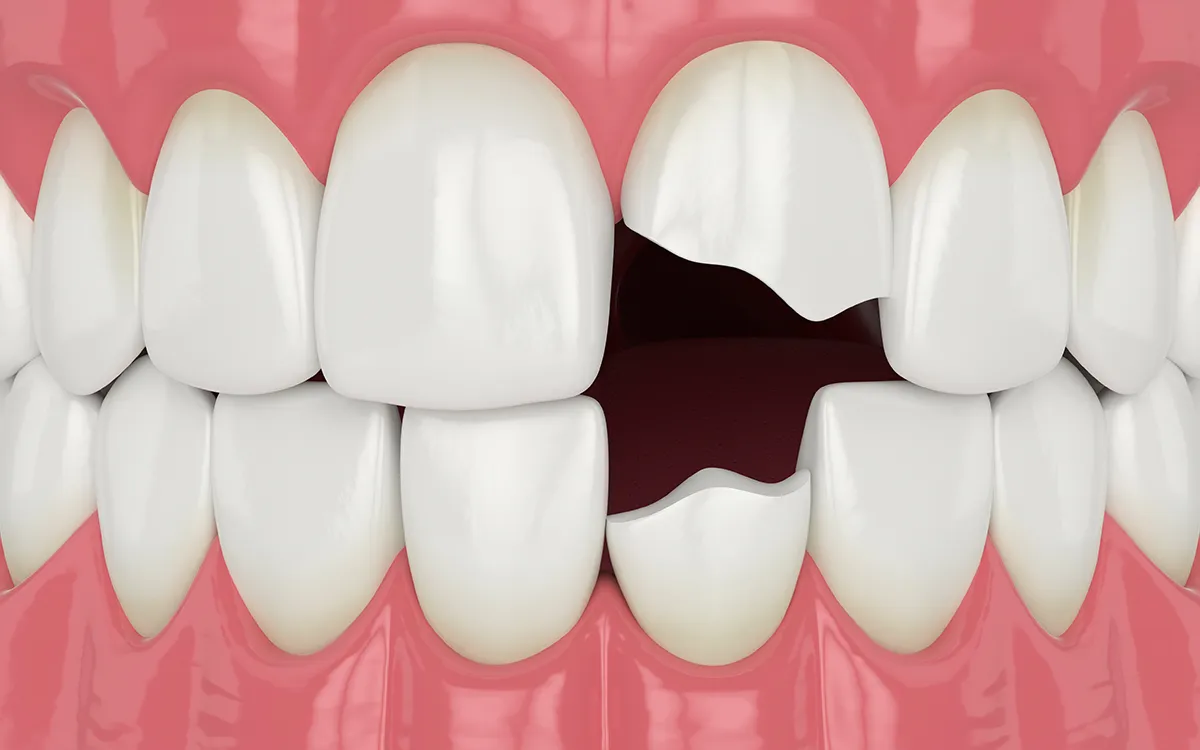
Not every broken tooth causes pain, but even small fractures should be assessed by a dentist. Tiny cracks can become larger over time, while deeper fractures may expose the sensitive inner layer of the tooth.
Until you receive treatment:
- Rinse your mouth with warm water.
- Save any broken pieces if you can find them.
- Apply a cold compress if swelling develops.
- Avoid biting on the affected side.
- Choose soft foods until the tooth has been examined.
A lost filling or crown
When a filling or crown comes off, the exposed tooth may become extremely sensitive to temperature and pressure.
If the restoration is intact:
- Keep it in a clean container.
- Avoid chewing on that side.
- Temporary dental cement, available from many pharmacies, may help protect the tooth until your dental appointment.
Avoid using household glue or other adhesives. These products are not designed for use inside the mouth and can make treatment considerably more difficult.
A broken denture or dental appliance
A damaged denture, retainer, or mouthguard may seem less urgent than a toothache, but attempting a home repair often causes more harm than good.
Household glues may contain chemicals that are unsafe for oral use and can permanently damage the appliance.
Store the broken pieces safely and arrange an appointment with your dentist for professional repair or replacement.
Swelling or a dental abscess
Swelling around a tooth or gums often indicates infection. While some infections develop slowly, others can spread surprisingly quickly.
You may notice:
- Swollen or tender gums.
- A pimple-like bump near the affected tooth.
- Pain when biting.
- A bad taste in the mouth if the abscess begins to drain.
Rinsing gently with warm salt water may provide temporary comfort, but antibiotics alone rarely solve the underlying dental problem. The source of the infection still requires professional treatment.
If swelling rapidly increases or begins affecting your breathing or swallowing, seek immediate medical attention.

Bleeding after dental treatment
Minor bleeding following a tooth extraction is generally normal during the first few hours.
To help control it:
- Bite firmly on clean gauze for around 30 to 60 minutes.
- Keep your head elevated.
- Avoid vigorous rinsing, smoking, alcohol, and using straws for the first 24 hours.
If heavy bleeding continues despite firm pressure, contact your dentist or attend the nearest emergency department.
What not to do during a dental emergency
Well-intentioned home remedies can sometimes make the situation worse. Avoid these common mistakes:
- Do not ignore persistent pain simply because it temporarily subsides. The nerve inside the tooth may have died while infection continues to spread.
- Do not use superglue or household adhesives to repair crowns, bridges, dentures, or broken teeth.
- Do not poke around painful areas with toothpicks, needles, or other sharp objects.
- Do not place aspirin directly onto your gums.
- Do not delay treatment if swelling is increasing or pain becomes difficult to manage.
Contact your dentist as soon as possible
Many dental practices reserve appointments each day for emergency patients. If your problem occurs outside normal business hours, check your dental clinic’s voicemail, website, or online booking system for after-hours instructions.
If your clinic provides an emergency contact number, follow the guidance provided. Even if immediate treatment is not available overnight, speaking with a dental professional can help you manage the situation safely until you can be seen.
Seeking care promptly often allows your dentist to relieve pain sooner, preserve damaged teeth, and prevent more complex treatment later.
Reducing the risk of an emergency
Not every dental emergency can be prevented, but many begin as small problems that go unnoticed or untreated. Regular dental check-ups allow your dentist to identify weakened fillings, cracked teeth, tooth decay, and gum disease before they become painful or require urgent attention.
Simple habits matter too. Brushing and flossing well, wearing a custom mouthguard during contact sports, and avoiding unnecessary strain on your teeth can all help reduce the risk of injury.
The goal isn’t to eliminate every possibility of an emergency. It’s to make one far less likely. Small preventive steps, combined with prompt action when something changes, can make a significant difference.